Construction projects are getting taller, faster, and more congested. Yet most tower crane incidents still do not happen because a crane fails mechanically.
They happen because operators, planners, and project teams lose visibility of what is happening in real time.
Across high-rise developments in Mumbai, Pune, NCR, Bengaluru, and Hyderabad, tower cranes now operate in environments where multiple lifting activities occur simultaneously. Overlapping crane zones, restricted airspace, blind lifting areas, and compressed project schedules have increased the importance of crane safety systems far beyond basic compliance.
For EPC contractors, developers, and safety managers, tower crane safety is no longer just about preventing accidents. It directly affects project continuity, audit readiness, workforce protection, insurance exposure, and delivery timelines.
This guide explains the tower crane safety systems modern projects rely on, why traditional safety approaches are no longer sufficient, and how EPC teams are reducing lifting risks through better planning and monitoring.

On modern construction sites, a crane incident rarely impacts only one lift.
A single safety failure can lead to:
This is especially true on high-rise projects where tower cranes support multiple trades throughout the construction cycle.
As a result, leading EPC contractors now evaluate crane safety alongside productivity and operational efficiency rather than treating it as a separate compliance function.
On high-rise projects in Mumbai and NCR, it is now common for two or more tower cranes to operate within overlapping work zones. This has increased the adoption of anti-collision and zoning systems during early project planning rather than after crane installation.
Safe Load Indicators help operators monitor:
The system provides real-time information that allows operators to make safer lifting decisions.
However, simply installing a Safe Load Indicator is not enough.
Many incidents occur because systems are poorly calibrated, incorrectly configured, or not maintained throughout the project lifecycle.
Projects increasingly deploy Safe Load Indicators for crane load monitoring to improve lifting visibility and reduce overload-related risks.
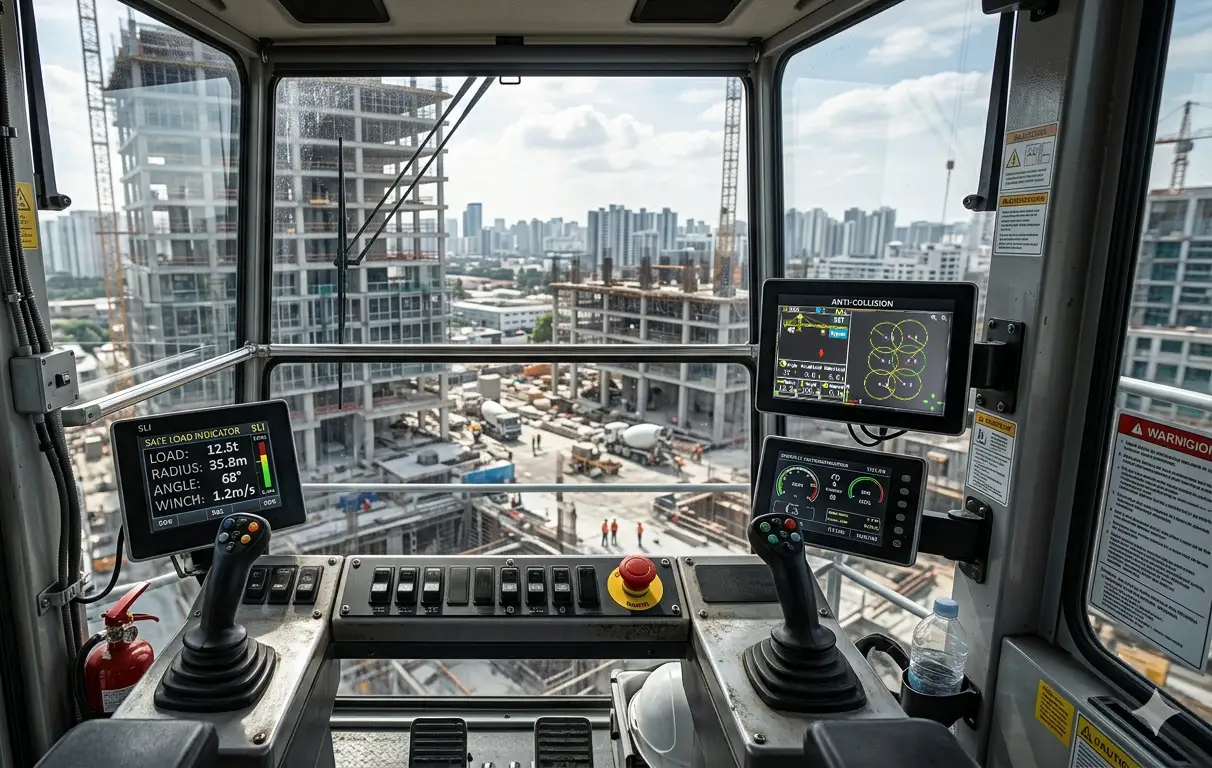
As urban construction density increases, multiple cranes often work within overlapping operating zones.
This creates risks such as:
To address these challenges, many contractors now implement anti-collision systems for tower cranes that monitor crane movement and provide operator warnings before conflicts occur.
These systems are becoming increasingly important on high-rise projects where manual coordination is no longer sufficient.
Modern tower crane safety involves more than load monitoring.
Many projects establish digital operating zones that restrict crane movement near:
Zoning systems help ensure crane operations remain within approved working areas while reducing operator dependency.
Operators manage complex lifting conditions every day.
Factors such as:
Modern alert systems improve visibility and provide real-time operational feedback, helping operators respond more effectively to changing site conditions.
Many projects assume crane safety has been addressed once an SLI is installed.
In reality, overload risk is only one part of the equation.
A crane can operate within load limits while still facing:
This is why many high-rise projects now combine Safe Load Indicators with anti-collision and zoning systems rather than relying on a single safety device.
Contractors reviewing integrated safety strategies often study common Safe Load Indicator failures on construction sites to understand where traditional approaches fall short.
Across major Indian cities, construction plots continue to shrink while building heights increase.
This creates a new set of operational challenges:
Traditional visual communication methods become less reliable as complexity increases.
Anti-collision systems provide:
For many EPC contractors, these systems have moved from optional upgrades to critical safety infrastructure.
Despite advancements in technology, several recurring issues continue to affect crane operations.
Many teams install safety systems after crane commissioning rather than incorporating them during planning.
Sensors and monitoring systems require validation throughout the project lifecycle.
A crane setup that works during foundation stages may become problematic once structures rise vertically.
Even highly experienced operators cannot consistently predict:
Technology should support operational judgement, not replace it.
Many crane safety issues originate long before lifting operations begin.
Effective safety planning starts with :
This is why contractors evaluating tower cranes for high-rise construction projects increasingly assess safety compatibility during equipment selection.
Similarly, teams using tower crane rental solutions for EPC projects now review monitoring system integration and future site constraints before deployment.
Many planners also reference how EPC contractors choose the right crane setup when developing long-term lifting strategies.
Not all crane safety systems perform equally under real site conditions.
Key evaluation criteria include:
The most effective solutions are those designed to function within the realities of active construction environments rather than controlled demonstrations.
There is no single system. Modern projects typically combine Safe Load Indicators, anti-collision systems, zoning controls, and operator monitoring tools.
Requirements vary by project and crane type, but they are increasingly expected on high-rise construction sites and during safety audits.
Urban construction projects often involve multiple cranes operating in restricted spaces where collision risks are significantly higher.
After installation, major crane modifications, and periodically throughout operations according to site requirements.
Yes. Better visibility and operational control often reduce disruptions, delays, and unnecessary work stoppages.
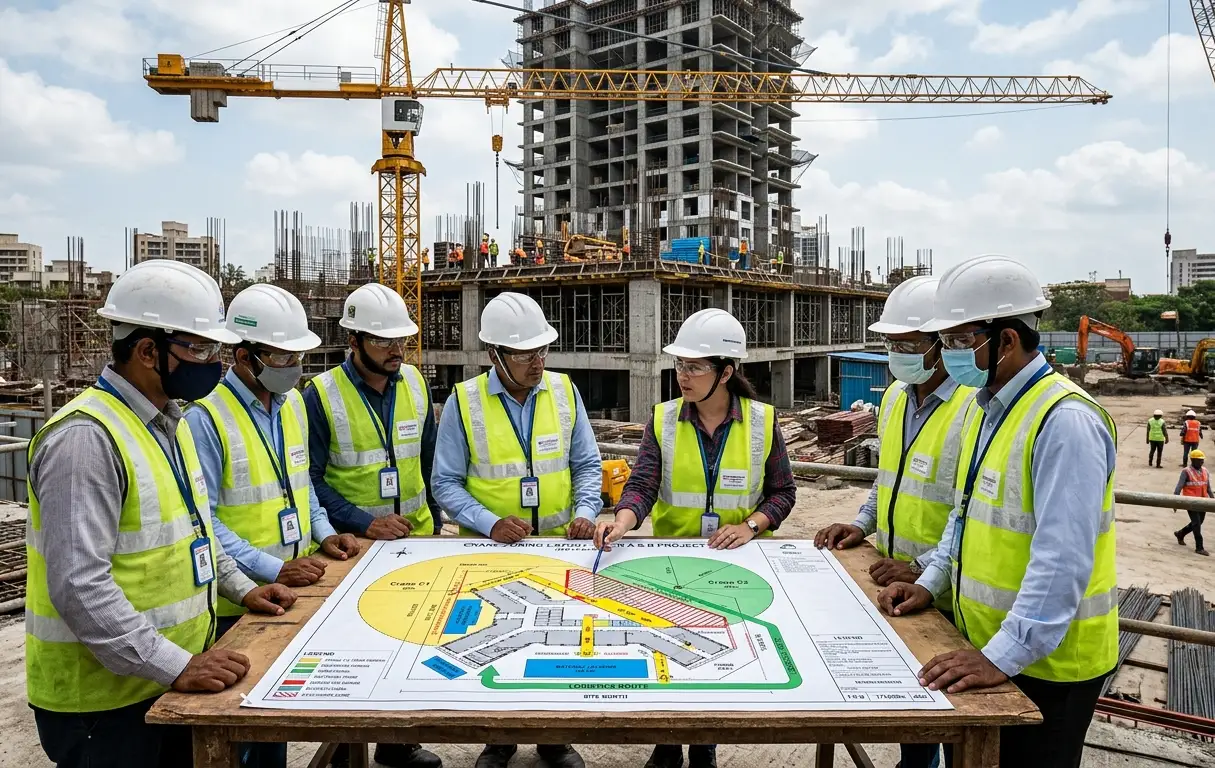
Tower crane safety in 2026 is no longer about installing a device and checking a compliance box.
The most successful EPC projects approach safety as an integrated operational system that combines load monitoring, collision prevention, zoning control, and proactive planning.
Projects that invest in these safety layers consistently achieve:
In modern high-rise construction, tower crane safety systems are no longer just safety tools.
They are project performance tools.
Evaluate crane safety systems, monitoring technologies, and lifting strategies early to improve safety, productivity, and project control throughout the construction lifecycle.