High-rise projects rarely face their biggest lifting challenge at the beginning of construction.
The real problem usually appears near the end.
Once the structure reaches top-out, many EPC contractors face a difficult question:
How do you continue rooftop lifting or dismantle the tower crane safely when external crane access is restricted?
On dense urban projects across Mumbai, Pune, NCR, and Bengaluru, this has become a major execution challenge. Roads are tighter, neighboring towers are closer, and mobile crane access is increasingly limited.
That is why derrick cranes are becoming more important in modern high-rise construction.
Today, contractors are no longer treating derrick cranes as niche equipment used only during dismantling. They are planning them early as part of the overall lifting strategy to reduce delays, improve rooftop access, and avoid expensive last-stage modifications.
This guide explains where derrick cranes fit into modern construction projects, how they differ from tower cranes, and why better planning directly impacts project efficiency and safety.
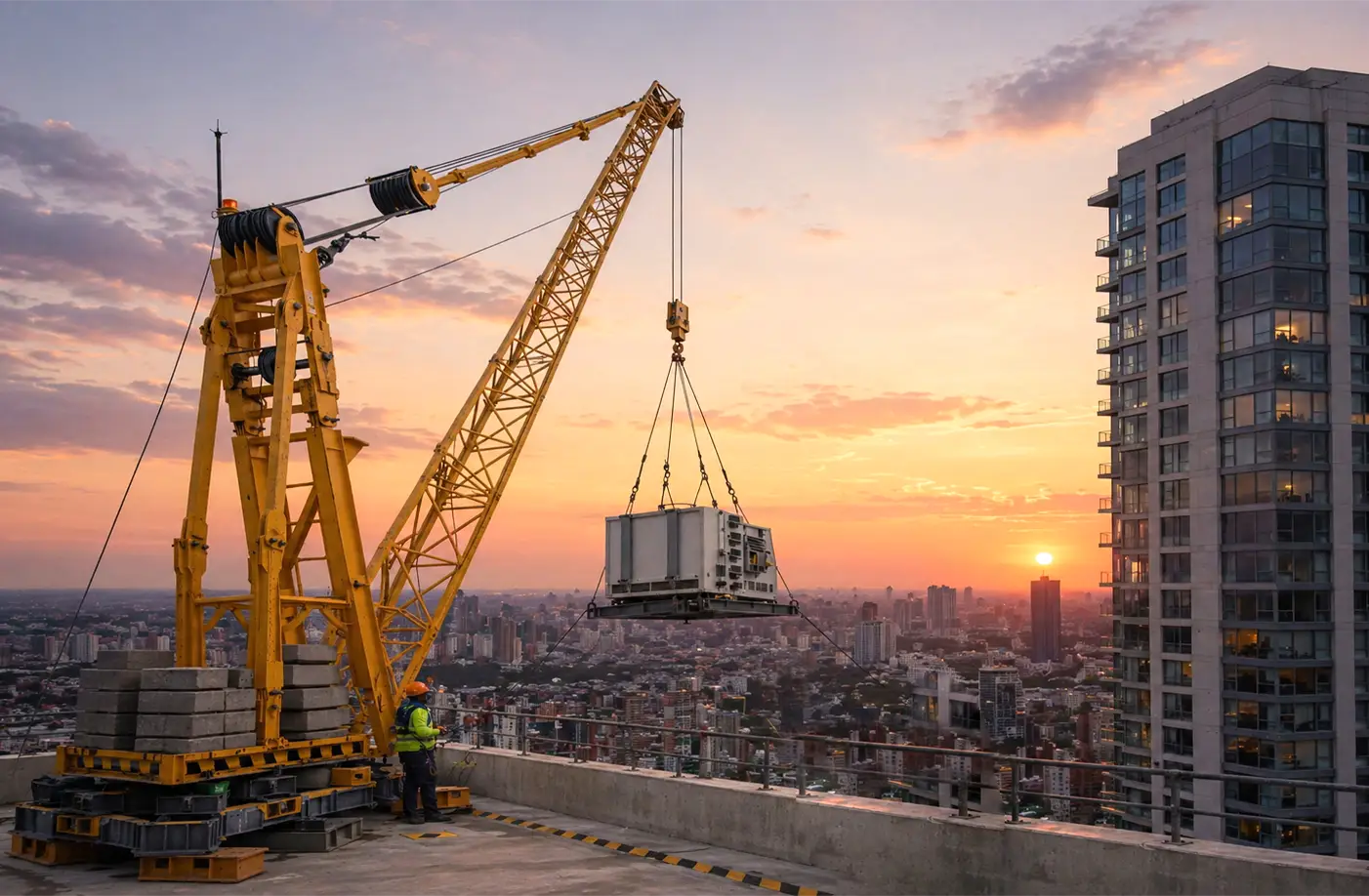
Earlier, many projects finalized crane decisions based only on lifting capacity.
That approach no longer works on dense urban sites.
Modern high-rise construction now involves:
A tower crane may perform efficiently during the structural phase, but once façade work, rooftop equipment installation, or crane dismantling begins, site conditions change completely.
This is where derrick cranes become valuable.
Unlike large external cranes, derrick cranes operate directly from the rooftop and require significantly less surrounding access space.
For projects with difficult dismantling conditions, early derrick crane planning often prevents:
Derrick cranes are typically used during the final stages of high-rise construction, especially when tower crane operations become impractical.
Common applications include:
On several urban projects, contractors now combine tower cranes and derrick cranes as part of a phased lifting approach rather than relying entirely on one system.
Projects evaluating long-term lifting planning often review both tower crane rental solutions and derrick crane deployment together to avoid later execution bottlenecks.
A tower crane is designed for continuous high-capacity lifting throughout the main construction phase.
A derrick crane is designed for controlled rooftop lifting in confined conditions.
That difference is critical.
The mistake many projects make is comparing them as alternatives.
In reality, both cranes often support different phases of the same project.
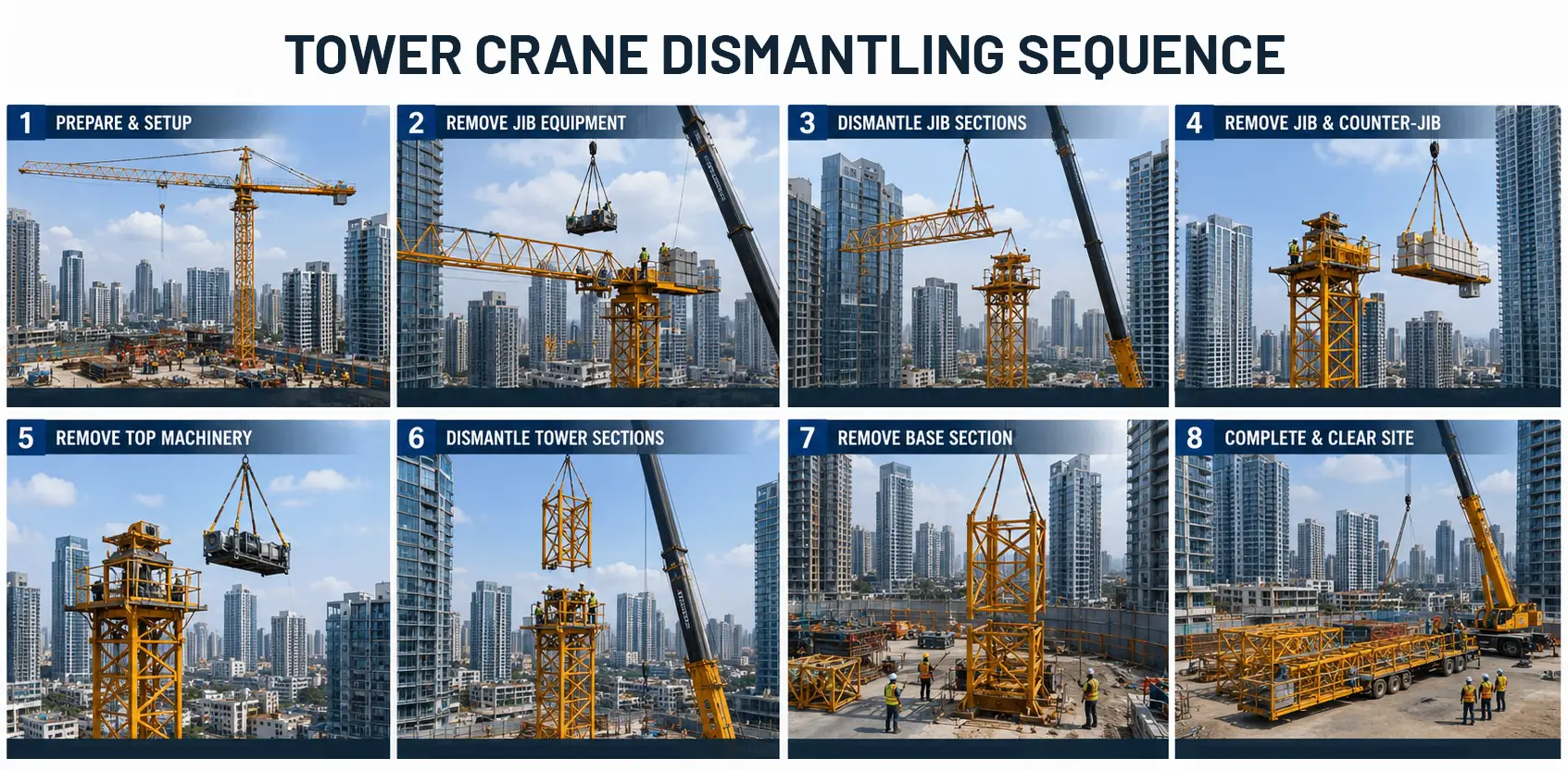
One of the most common planning failures on high-rise projects is ignoring dismantling strategy until the building is nearly complete.
At that stage:
This creates expensive last-minute decisions.
Projects that plan rooftop lifting and dismantling early generally experience:
Many EPC teams now evaluate derrick crane requirements during early crane planning itself instead of treating them as emergency equipment later.
Urban construction density in India has changed significantly over the last few years.
Projects now regularly face:
Because of this, rooftop lifting is no longer a simple operational task.
It has become a planning challenge.
This shift is also influencing how contractors approach overall crane strategy, including decisions around tower crane for sale and rental configurations based on long-term site execution requirements.
Derrick cranes operate in confined rooftop environments where safety margins are smaller.
Common risks include:
Projects that integrate lifting safety early typically combine:
This is especially important on projects already operating with multiple tower cranes and restricted urban airspace.
Contractors improving crane safety planning often integrate anti-collision systems and load monitoring solutions during earlier project stages to reduce operational conflicts later.
Many high-rise projects now use a hybrid lifting model:
This improves:
Instead of asking:
“Which crane is better?”
Experienced project teams now ask:
“Which crane works best at each project stage?”
That shift is changing crane planning across high-rise construction projects in India.
On multiple high-rise projects, crane-related delays rarely begin during early structure work.
They usually appear during:
By this stage, schedule flexibility is already limited.
Projects that planned rooftop lifting requirements early generally avoided:
This is why derrick crane planning is increasingly becoming part of early project engineering discussions rather than late-stage procurement.
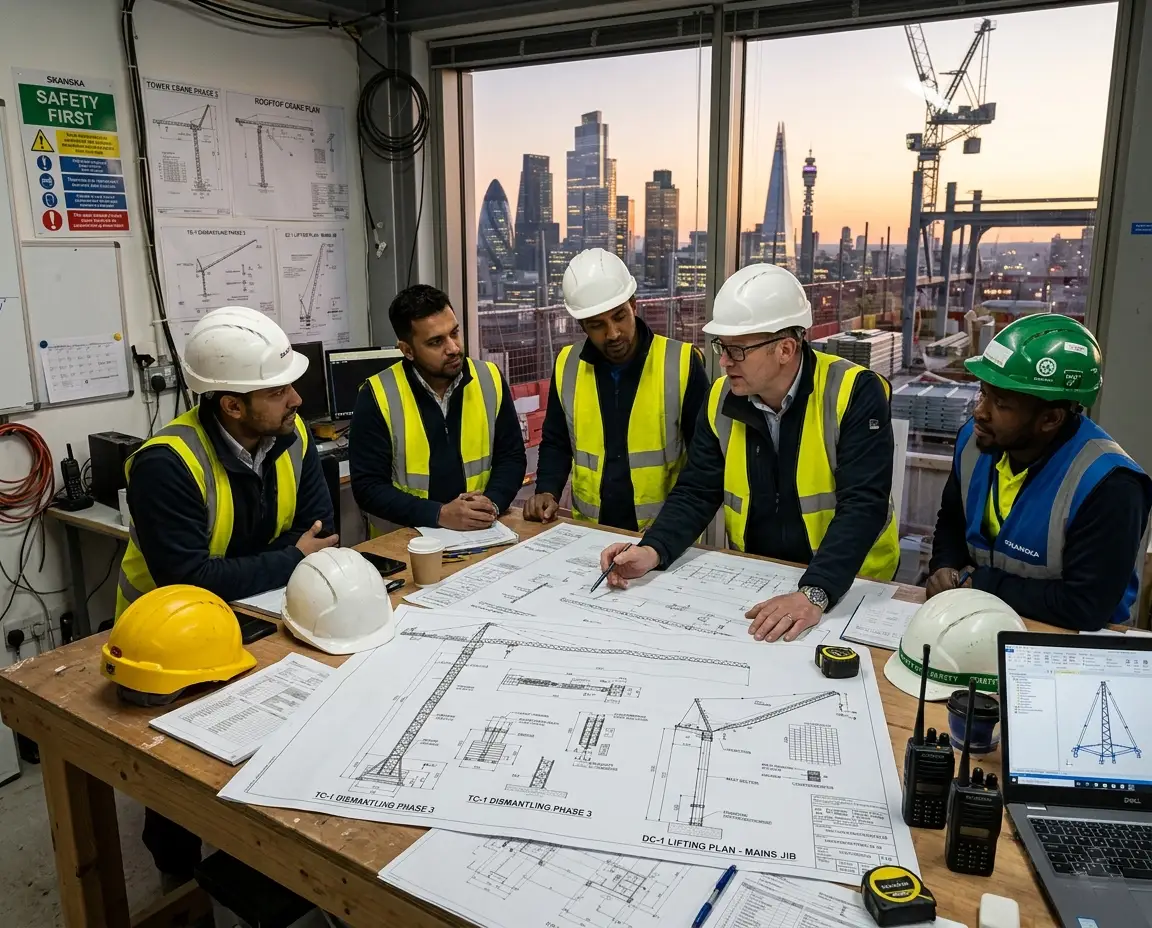
Derrick cranes are no longer treated as occasional specialty equipment on high-rise projects.
They have become an important part of modern lifting strategy, especially on dense urban developments where rooftop access and dismantling complexity directly affect project timelines.
Tower cranes drive the main construction phase.
Derrick cranes solve the final-stage lifting challenges that many projects underestimate.
Teams that plan both systems early usually achieve:
In modern high-rise construction, the right lifting strategy is not about choosing one crane over another.
It is about planning every stage before the site becomes constrained.