For EPC contractors and developers working on tall structures, choosing between a derrick crane and a tower crane can directly affect project cost, dismantling complexity, safety exposure, and completion timelines.
Many projects begin with a tower crane because it handles heavy lifting throughout the construction phase. But as the building approaches completion, contractors often face a different challenge:
How do you safely remove or continue lifting from the roof when the tower crane is no longer practical?
That is where derrick cranes become relevant.
Across high-rise projects in Mumbai, Pune, NCR, and Bengaluru, contractors increasingly evaluate both systems together instead of treating them as separate decisions. The goal is no longer simply choosing a crane.
The real objective is choosing the right lifting strategy for every stage of the project.
This guide explains how derrick cranes compare with tower cranes, where each works best, and how project teams can make the right decision before costly delays begin.
Earlier, crane selection was mostly based on lifting capacity.
Today, project teams also evaluate:
A crane that performs well during structural construction may become inefficient during finishing stages.
That is why contractors now compare:
before choosing a crane.
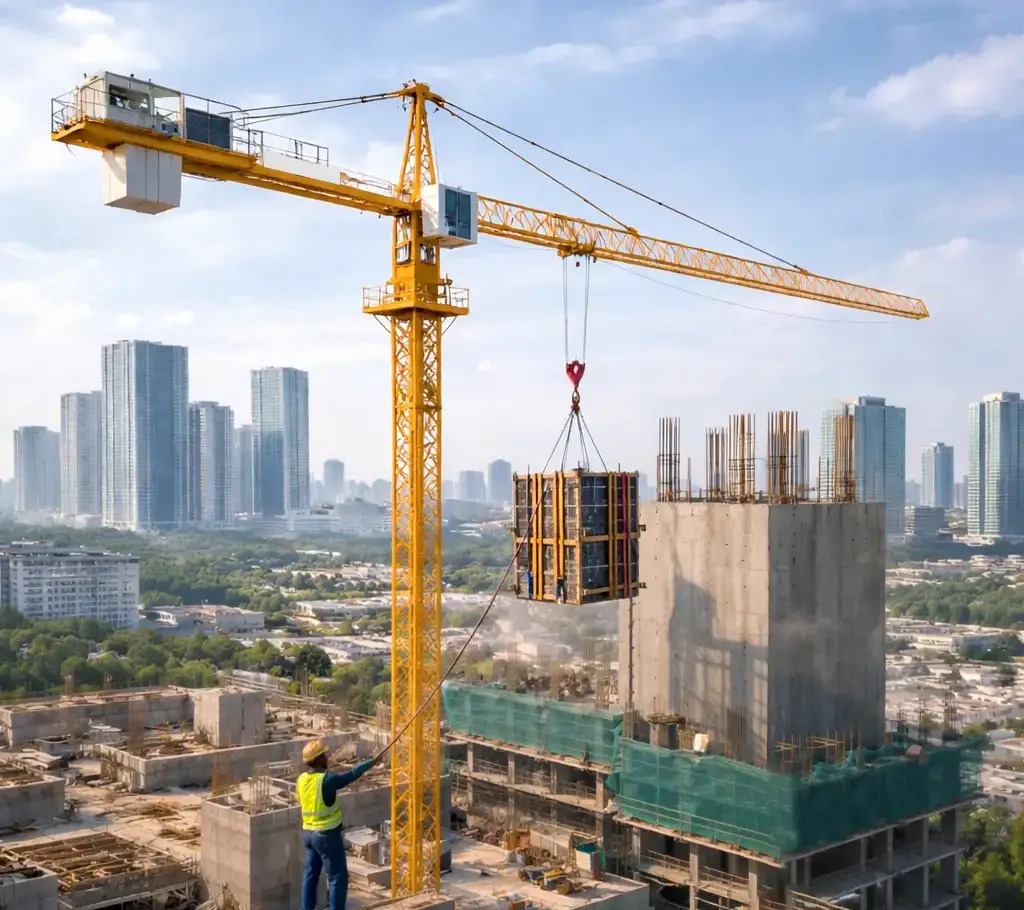
A tower crane is usually the primary lifting system for:
Its strengths include:
For projects requiring daily vertical material movement, many contractors evaluate available tower crane sale solutions to match the crane with structural height and site load demands.
A tower crane remains the most efficient choice during the main construction phase.
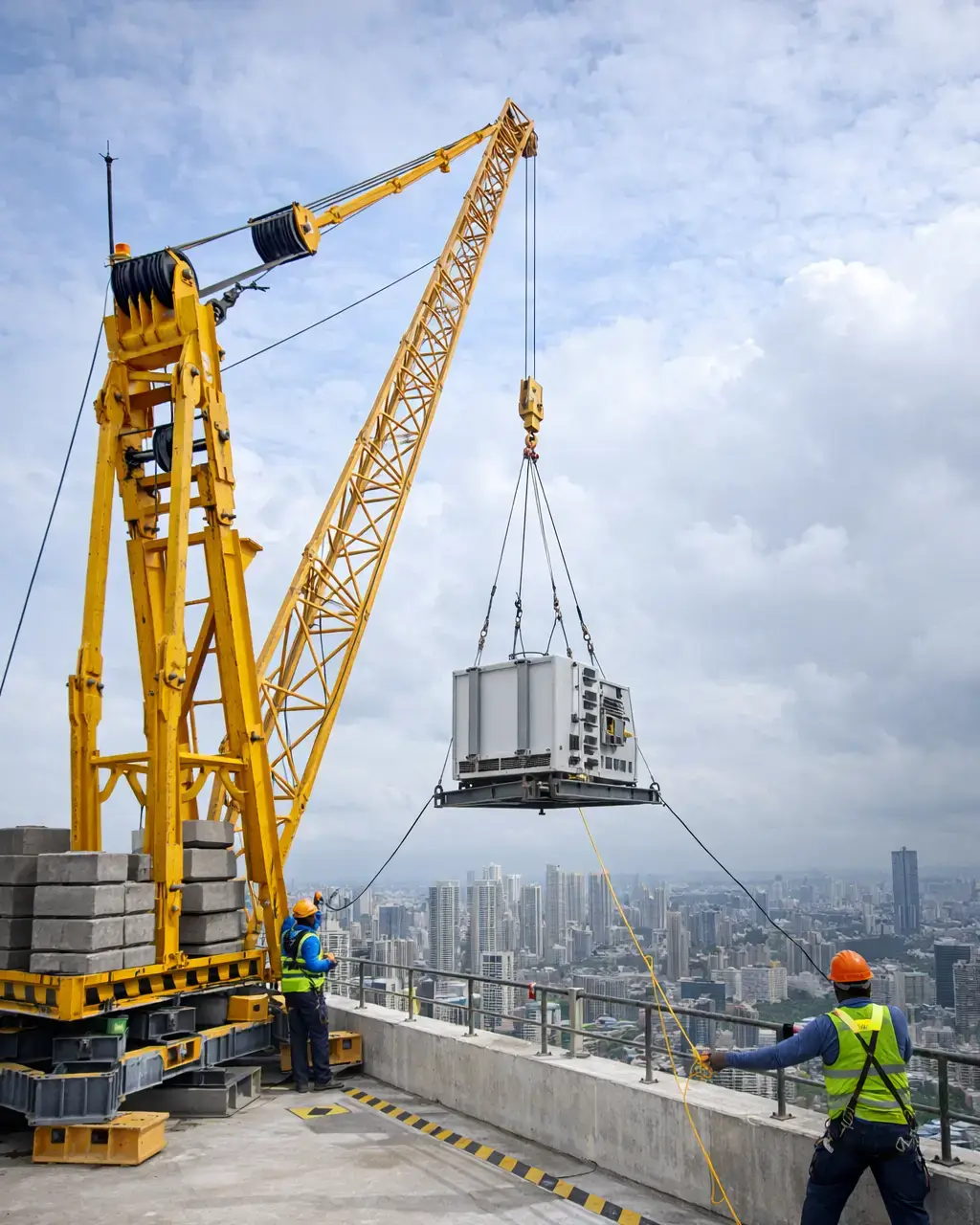
A derrick crane is commonly used when:
Unlike a tower crane, a derrick crane:
On tall urban buildings, a derrick crane can often reduce dismantling cost compared with bringing in large external cranes.
For projects approaching the final lifting stage, many contractors review derrick crane rental options to manage rooftop dismantling safely without relying on larger external cranes.
Factor |
Derrick Crane |
Tower Crane |
|---|---|---|
| Best use | Rooftop lifting | Main construction |
| Installation | Roof-mounted | Ground anchored |
| Space required | Minimal | Larger footprint |
| Lift capacity | Moderate | Higher |
| Mobility | Limited | Wider coverage |
| Dismantling support | Excellent | Requires support |
A tower crane handles the project build.
A derrick crane often supports the project finish.
Both can be part of the same lifting strategy.
A tower crane is usually selected when the project involves:
Contractors reviewing tower crane rental options often choose rental when:
This gives flexibility without long-term ownership.
A derrick crane becomes useful when:
Many contractors overlook this until late.
That often causes:
Planning early allows project teams to evaluate derrick cranes for sale or rental based on rooftop access, lifting duration, and long-term site requirements.
Cost should not be judged only by daily rental rates.
Project teams should compare:
In many high-rise projects:
Tower crane = lower cost during structure
Derrick crane = lower cost during finishing
The lowest total cost often comes from using both at the right time.
Tower cranes create risks such as:
Derrick cranes create different concerns:
Because of this, contractors must evaluate:
Projects that integrate lifting safety early usually avoid last-minute shutdowns.
are changing crane strategy.
instead of relying on one crane type alone.
That approach improves:
Common errors include:
Lower cost can create higher delays.
Many teams only plan for construction.
This creates costly redesign later.
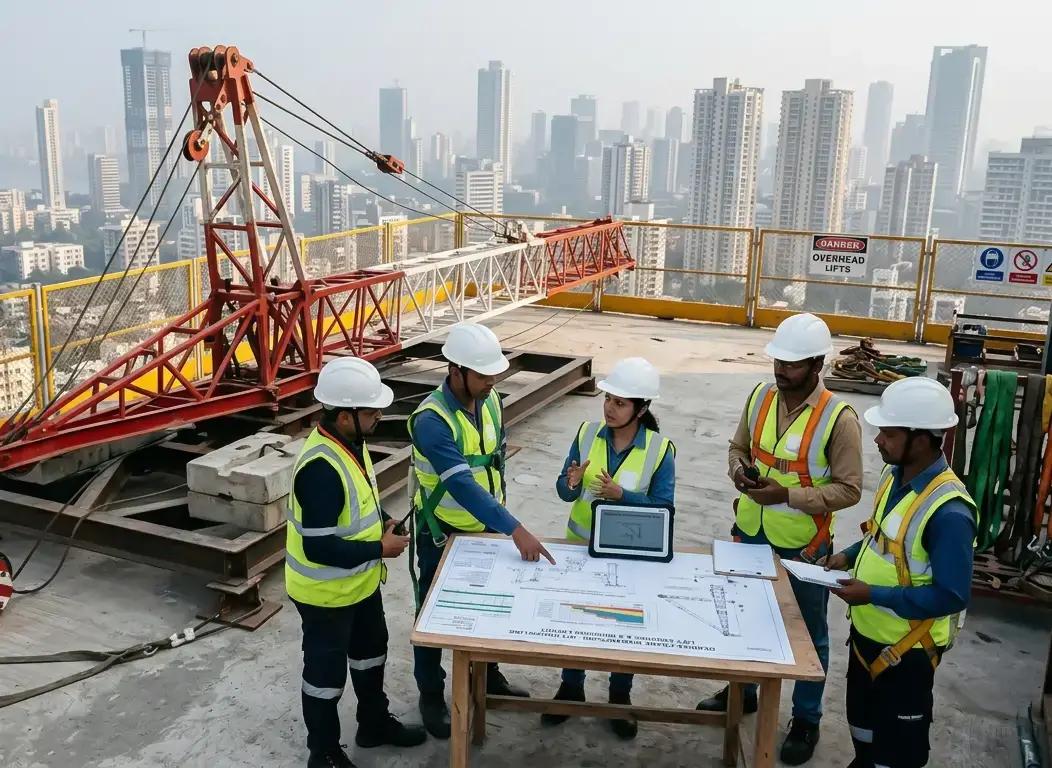
Structural and lifting teams must align early.
These mistakes often increase total project cost.
Choose a tower crane if your project needs:
Choose a derrick crane if your project needs:
Some projects need both.
The best decision depends on the project stage, not just equipment type.
Usually no. A derrick crane supports final-stage lifting, not full construction.
For short rooftop operations, yes. For full construction, no.
During early crane planning, not after top-out.
No. Only projects with difficult dismantling or rooftop lifting needs.
The question is not simply:
The better question is:
Tower cranes drive the main build.
Derrick cranes solve final-stage lifting challenges.
Projects that plan both early usually achieve:
Review your lifting strategy early by comparing tower crane rental, ownership, and rooftop crane requirements before the project reaches its most expensive stage.