Construction projects across India are becoming taller, faster, and more complex. As a result, crane safety is no longer treated as a basic compliance requirement. For EPC contractors, developers, and safety teams, it has become a critical factor influencing project continuity, audit readiness, insurance exposure, and operational efficiency.
Across high-rise projects in Mumbai, Pune, NCR, Bengaluru, and Hyderabad, crane-related risks are increasingly linked not to equipment absence, but to poor planning, weak monitoring systems, and inconsistent safety execution under real site conditions.
Modern construction sites now operate with:
In these environments, traditional crane safety practices are no longer enough.
The focus has shifted from reactive safety checks to integrated crane safety systems that improve visibility, control, and real-time decision-making throughout the project lifecycle.

Many projects technically comply with basic crane safety requirements but still experience:
The reason is simple.
Compliance alone does not guarantee operational safety.
In many cases, safety systems exist on paper but are poorly calibrated, improperly integrated, or ignored during daily operations.
On dense urban projects, crane risks often develop gradually through:
Without active monitoring and coordinated control systems, these risks compound over time.

Large EPC and infrastructure projects now evaluate crane safety as a complete operational framework rather than a checklist item.
Projects that integrate these layers early typically experience:
This shift is especially visible on high-rise construction sites where tower cranes operate in restricted urban environments.
Teams planning cranes for construction projects now evaluate safety integration alongside lifting capacity and site logistics during early project planning stages.
One of the most important crane safety systems today is the Safe Load Indicator (SLI).
An SLI helps operators monitor:
However, many crane incidents still occur on projects where SLIs are already installed.
Why?
Because the issue is often not installation.
It is an incorrect implementation.
Common SLI-related problems include:
Projects using properly configured crane load indicator systems generally achieve better operational control and reduced safety interruptions.
For complex lifting environments, many contractors now evaluate integrated anti-collision devices and safe load indicators together instead of treating them as separate systems.
Urban construction density has increased significantly over the last few years.
Modern projects frequently involve:
In these conditions, manual coordination is no longer sufficient.
This is why anti-collision systems are increasingly deployed across high-rise EPC projects to improve crane movement control and reduce operator dependency.
Integrated anti-collision and safe load monitoring systems help:
Projects implementing advanced crane safety systems early often experience fewer operational conflicts during peak construction phases.
Contractors reviewing integrated crane safety solutions for high-rise projects increasingly prioritize compatibility, calibration quality, and long-term support instead of focusing only on hardware cost.
One of the biggest mistakes on Indian construction sites is treating crane safety as a post-installation activity.
In reality, effective crane safety begins during:
Poor early planning often creates:
This is why EPC contractors increasingly align crane planning with long-term site execution strategy instead of selecting equipment purely based on availability.
Projects evaluating tower crane rental or purchase decisions now also assess:
Early coordination significantly reduces later-stage safety complications.
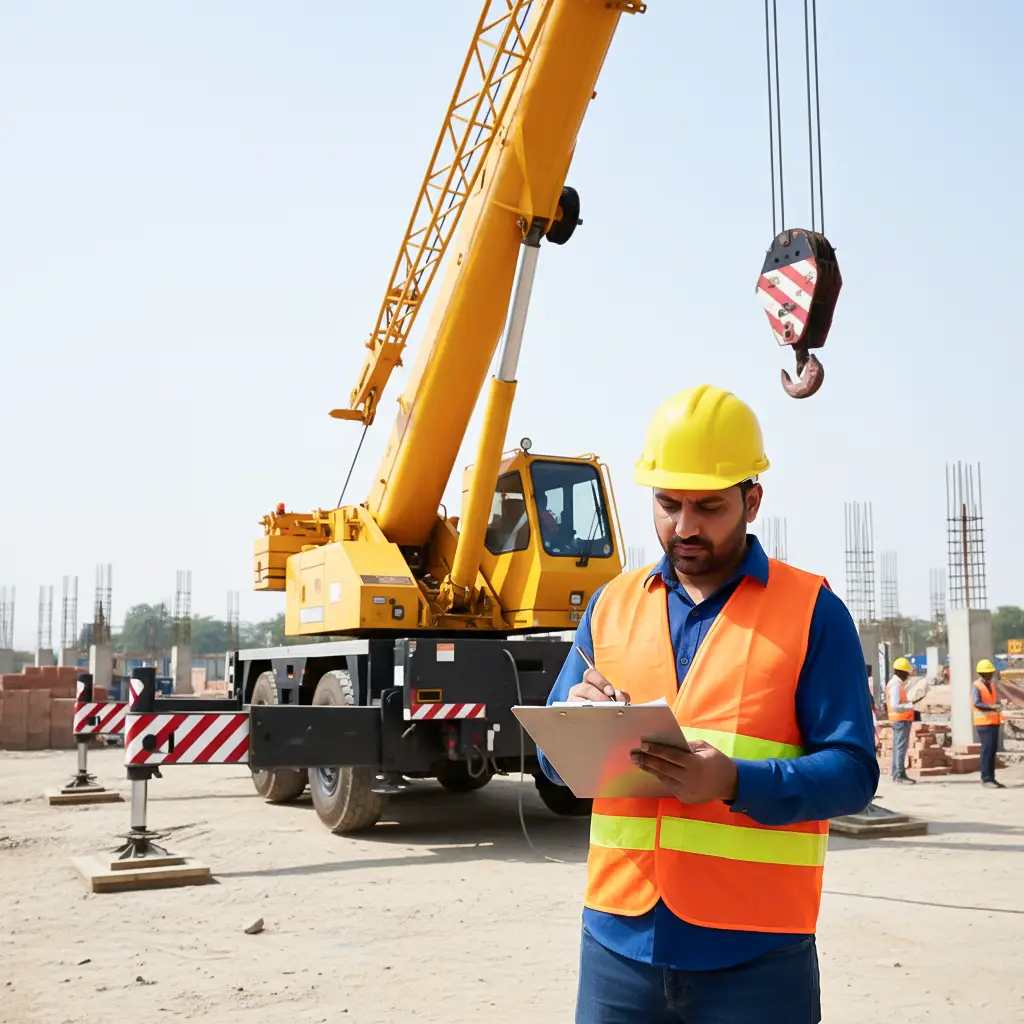
Across Indian high-rise projects, several recurring crane safety issues continue to appear:
A crane layout that works during early construction may become unsafe as the project height increases.
Installing monitoring systems late often creates calibration and coordination issues.
Even experienced operators cannot consistently judge:
Poor maintenance directly affects:
These problems rarely appear immediately.
They build slowly and become visible only after delays, incidents, or audit observations occur.
Projects achieving stronger crane safety outcomes typically follow a proactive approach.
This includes:
Many leading projects now treat crane safety systems as operational intelligence tools rather than basic compliance devices.
This improves:
Most incidents occur due to poor planning, incorrect calibration, operator dependency, or weak monitoring discipline rather than equipment absence.
No. High-density projects typically require integrated anti-collision systems and zoning control for safer operations.
Calibration should be reviewed after installation, configuration changes, and periodically during operation depending on site conditions.
They help prevent crane interference, improve movement control, and reduce risks in overlapping crane environments.
Crane safety in India is evolving rapidly.
Projects are no longer judged only by lifting capacity or construction speed. They are increasingly evaluated on how safely and predictably lifting operations are managed throughout execution.
Teams that integrate crane safety systems early consistently achieve:
In modern high-rise construction, crane safety is no longer just a compliance requirement.
It is a critical part of project performance.
Evaluate anti-collision systems, Safe Load Indicators, and crane planning strategies early to improve operational safety, audit readiness, and lifting efficiency across high-rise construction projects.